Are you facing challenges
to get the best behavior from your child? Do you feel powerless in dealing with
your child? Then continue reading to understand how praising, encouraging and rewarding your child will work wonders.
Key Takeaways
- When you praise children,
you tell them you enjoy how they act.
- Praise is more effective
when it explains the desired behavior.
- Encouragement is praise
for effort, such as observing your child working hard.
- At any age, you can
praise and encourage your child.
- Rewards enhance desired
behavior, but you should use them sparingly.
How is praising your
child helpful?
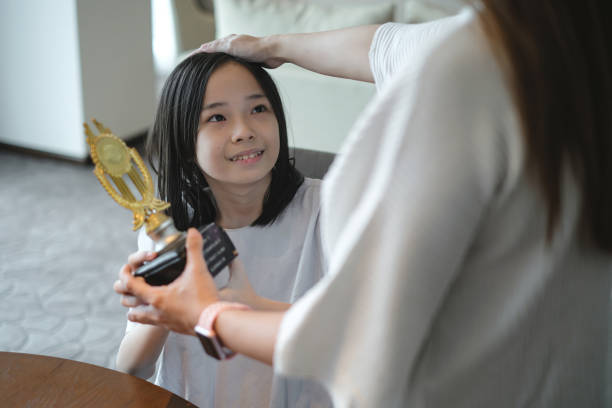
It's important to praise
your child to show that you appreciate their actions or behavior. You can do
this by saying, "Great job, kid," "Well done, dear," or
"That's awesome, kiddo."
Praise builds your
child's self-esteem and confidence.
You are teaching your
youngster how to think and speak positively about themselves by utilizing
praise. You're teaching your youngster how to recognize and appreciate their
accomplishments.
You can praise children
of various ages for a variety of reasons. You might compliment a younger child
for sharing or leaving the park when requested. You might commend an adolescent
for being home on time or starting schoolwork without being prompted.
When you give your child
descriptive praise, you inform them precisely what you admire. 'I admire how
you've found a place for everything in your room,' for example. This allows
your youngster to realize precisely what they did successfully. It's more
sincere than generic compliments like "You're a good boy."
Encouragement:
commendation for effort
'You worked hard on that
arithmetic homework - well done,' is an example of encouragement. Praise for
effort can excite and encourage your youngster to work hard in the future.
You can also use positive
reinforcement before your child performs anything. 'Show me how nicely you can
put your toys away,' for example, or 'I know you're scared about the test, but
you've studied well. Whatever happens, you've done your best.’
Some youngsters, mainly
those less self-assured than others, require more support. Children are more
likely to regard striving hard as good when praise is centered on effort.
People who have this quality tend to keep going and stay optimistic even when
things get tough.
What are the rewards?
A reward is offered because
of excellent behavior. It's a method of expressing 'nicely done' when your
youngster has done something nice or behaved nicely. It might be a delight, a
surprise, or an added benefit. For example, you could let your child pick
what's for dinner as a prize for keeping their room clean.
Changing behavior via
praise, encouragement, and rewards
When praised or
encouraged, children are more likely to continue the conduct. This means you
can replace bad behavior with good behavior by praising and encouraging the
person.
The first step is to watch
for instances when your youngster acts well or makes an effort. When you see
this, quickly call your child's attention and tell them precisely what you
appreciated, such as, "Noor, I liked how you waited your turn to play with
that toy." 'Well done,' or 'You're putting much effort into your practice.
'I think you'll do fantastic in the tryouts!'
At the start, you can
praise whenever you notice the behavior or effort. You can reducePraise and
encouragement might be reduced as frequency increases.
You can improve praise
and encouragement with rewards. Children are more likely to repeat the actions
for which they are praised or encouraged and also rewarded.
It is important not to
overdo rewards. Suppose you are rewarding every now and then, you should
reconsider the issue. Is there anything more or different you can do to
encourage the desired behavior? Is the work or behavior too tricky for your
child at the moment?
It is sometimes easier to
recognize negative behaviors than positive behaviors. However, try to find
instances when your child is acting positively and congratulate them. Your
child will feel better, and concentrating on the positive will also make you
feel better.
How can you use praises, encouragement,
and giving rewards?
Use the following
techniques to help your kid recognize when they have done well and to encourage
good behavior:
·
Say something positive about your
youngster. See if you can say something positive to your child every day. Small
things you say might tremendously impact your child over time.
·
Look for nonverbal methods to encourage or
appreciate your youngster. A thumbs up, grin, or high five may effectively
express your appreciation for your child's behavior or efforts.
·
Surprise your youngster with a
good-behavior incentive. 'Thanks for picking up the toys - let's go to the park
to celebrate,' for example.
· Look for little modifications and
achievements. Rather than waiting for your child to accomplish something
precisely before complimenting them, strive to appreciate any attempt or
improvement.
·
Praise more than you criticize. A good
thumb rule is to offer five positive comments for every negative one.
·
Praise your youngster for their abilities
and encourage them to be enthusiastic about their hobbies. This will assist
your youngster in gaining pride and self-confidence.
· Make your compliments relevant to the
behavior. Your youngster may not trust your praise if it is excessive.
·
It would help if you used praise and
prizes in age-appropriate ways. Teenagers, for example, may not want to be
publicly acknowledged for their work, whereas toddlers may like being singled
out for praise.
Good luck to you.




Comments
Post a Comment